Managing the Rising Cost of Living in Hawaii: Smart Money Tips for Island Residents
Budget smarter, save more, and stay ahead of inflation
Living in Hawaii has always required a bit more financial awareness—but lately, many residents are feeling the squeeze even more.
From higher grocery bills to rising housing costs, electricity, and transportation expenses, inflation is quietly reshaping everyday life across the islands. Because Hawaii relies heavily on imported goods and has a limited housing supply, price increases often feel more immediate and more intense than in many mainland communities.
Although rising prices in Hawaii are beyond our control, smart financial planning and mindful spending can help you adapt. Small changes to your budget and daily habits can go a long way toward protecting your finances while still enjoying the unique lifestyle and experiences that make island living so special.
What Inflation Means for Island Life
Inflation reduces purchasing power over time, meaning your money doesn’t go as far as it once did. In Hawaii, the impact of inflation is often even greater due to higher shipping costs, supply chain disruptions, and the challenges of geographic isolation, all of which contribute to a higher overall cost of living.
For example, groceries and household goods often fluctuate more quickly. Utility costs—especially electricity—can rise due to fuel price changes. Even dining out or everyday errands can add up faster than expected.
Understanding this unique environment is the first step toward making smarter financial decisions.
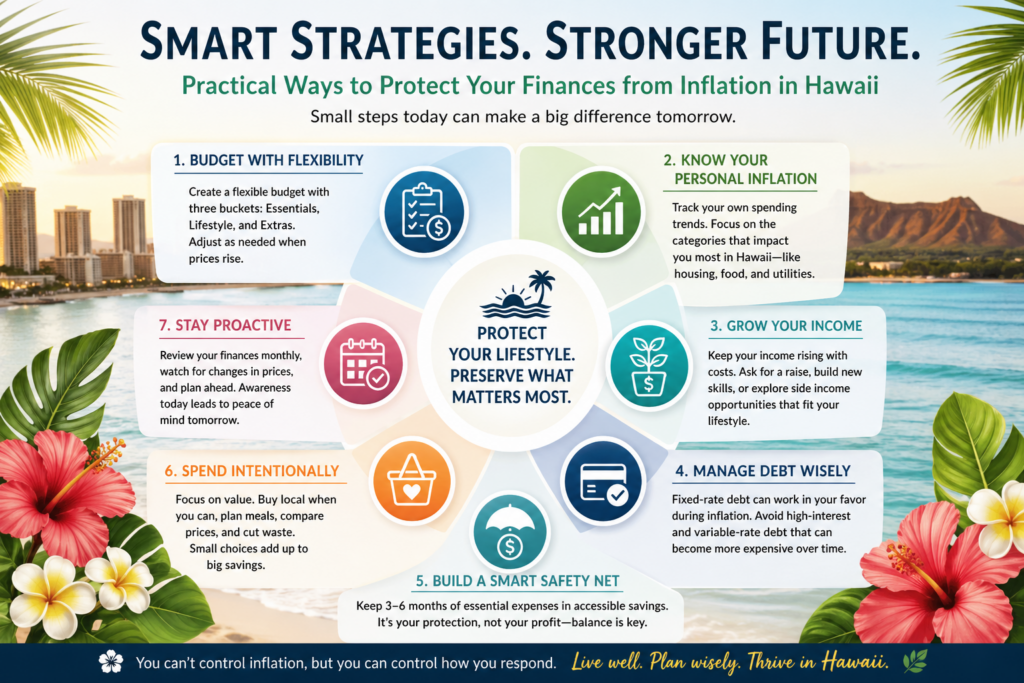
Shift to a Flexible Budget
Instead of trying to control every dollar, a more effective approach is to organize your spending into categories that allow you to adjust as needed. This gives you structure without feeling restricted when prices change.
Think of your budget as something that evolves month to month—not something set in stone. A few simple budgeting strategies can make it easier to manage rising expenses while maintaining financial balance, such as:
• Reduce non-essential purchases first
• Adjust lifestyle spending gradually
• Keep essential expenses protected
This approach allows you to respond to rising costs without feeling like you’re constantly starting over.
Know Your Personal Inflation Rate
The inflation numbers you hear in the news don’t always reflect your personal experience. Your actual cost increases depend on your lifestyle, housing situation, and spending habits.
For example, renters may feel housing increases more quickly, while homeowners with fixed mortgages may see more stability. Families may notice rising food costs more than single individuals.
Taking time to review your own expenses year-over-year can reveal where inflation is impacting you most and where adjustments may be needed.
Keep Up With Income
While managing expenses is important, there is only so much you can realistically reduce. Over time, maintaining your financial stability often depends on keeping your income growing alongside rising costs.
In Hawaii, this may mean being proactive about discussing cost-of-living adjustments with employers or exploring extra income opportunities tied to the local economy, such as tourism, remote work, or specialized services.
Even modest increases in income can help offset rising costs and provide more breathing room in your budget.
Manage Debt Wisely
Using debt strategically can help protect purchasing power during periods of inflation. Fixed-rate debt, such as a mortgage or certain business loans, allows borrowers to repay with future dollars that may be worth less over time, effectively lowering the real cost of the debt as inflation rises.
In contrast, high-interest and variable-rate debt can become more expensive as interest rates increase, making responsible borrowing and long-term financial planning essential. Ideally, borrowed funds should be directed toward appreciating assets or investments that may grow alongside inflation. Thoughtful debt management can help support long-term financial stability while preserving purchasing power.
Build a Smart Safety Net
Building an emergency savings fund is especially important in a high-cost living environment like Hawaii, where everyday expenses are already elevated. Unexpected costs—such as car repairs, medical bills, or inter-island travel—can arise quickly and put added pressure on your budget.
An emergency fund provides stability and peace of mind, especially when prices are unpredictable.
A general financial guideline is to save three to six months’ worth of essential living expenses. The key is finding balance—keeping enough in a readily accessible account for security, while still putting longer-term savings to work where appropriate.
Adjust Everyday Spending
In Hawaii, everyday habits can have a meaningful impact over time. Small shifts in how you shop and spend can help offset higher costs without drastically changing your lifestyle.
For instance, many residents find value in supporting local farmers markets, buying in bulk at warehouse stores, or planning meals more intentionally to reduce food waste.
Transportation is another area where small changes matter—combining errands, carpooling, or being mindful of fuel usage can save money over time.
Final Thought: Flexibility Helps You Stay Ahead of Inflation
Inflation is not new, but adapting to it is what makes a real difference in protecting your financial well-being. In Hawaii, where the cost of living is already higher than the national average, staying flexible, aware, and proactive is especially important for long-term financial stability.
The takeaway is simple: you don’t need a complete financial overhaul to manage rising costs. By making small, consistent adjustments to your spending, staying mindful of your budget, and keeping your income and savings working for you, you can build financial confidence over time.
With thoughtful planning and steady adjustments, you can stay ahead of inflation and continue enjoying island life without feeling overwhelmed by rising expenses.
>Want help building a personalized plan? Reach out to a local CFP® professional who understands Hawaii’s unique cost of living.