ESG Investing: Sustainable Strategies for the Aloha Lifestyle
Environmental, Social, and Governance (ESG) investing has evolved from a niche strategy into the financial mainstream—and here in Hawaii, that shift feels especially relevant. For local residents thinking about retirement, ESG is no longer just about aligning investments with personal values and sustainability goals. It has become a practical framework for managing long-term risks, protecting wealth, and investing in the future of the islands themselves.
ESG investing evaluates how companies handle:
- Environmental risks like climate change, natural resource use, and pollution
- Social issues such as labor practices, community impact, and cultural responsibility
- Governance structures, including leadership accountability and transparency
These factors may seem abstract at first glance. However, in Hawaii, environmental and social issues are directly connected to economic stability and can have a real impact on long-term financial outcomes.
Why ESG Factors Matter in Investment Analysis
ESG factors can provide deeper insight than traditional financial metrics alone. Companies that overlook environmental risks may face higher regulatory costs, supply chain disruptions, or reputational damage. In Hawaii, where coastal erosion, rising sea levels, and resource constraints are ongoing concerns, sectors like tourism, agriculture, and energy are especially exposed. Investors who integrate ESG risks into their strategy are often better positioned to limit downside risk and identify companies adapting to evolving environmental, social, and economic conditions.
ESG also adds a meaningful layer to retirement planning by aligning financial goals with lifestyle and legacy. Many Hawaii residents aim not only to sustain retirement income but also to preserve the islands’ natural beauty, cultural heritage, and community resilience. ESG investing supports companies and initiatives that reflect these priorities, including renewable energy, sustainable tourism, and local community investment.
Interest in ESG in Hawaii is driven by heightened awareness of environmental vulnerability—such as wildfire risk, water resource management, and reliance on imported energy—along with a strong cultural ethic of stewardship, or malama ʻāina. As more residents near retirement, there is also growing demand for strategies that balance income needs with long-term sustainability.
A generational shift is reinforcing this trend. Younger investors are placing greater emphasis on sustainability and social responsibility, and as wealth transfers occur, these preferences are increasingly shaping financial planning. At the same time, improved access to ESG data and investment products makes it easier to incorporate these factors without sacrificing diversification or performance.
Building Your Strategy for ESG Investing
When building an ESG-focused retirement portfolio, here are some effective strategies to consider.
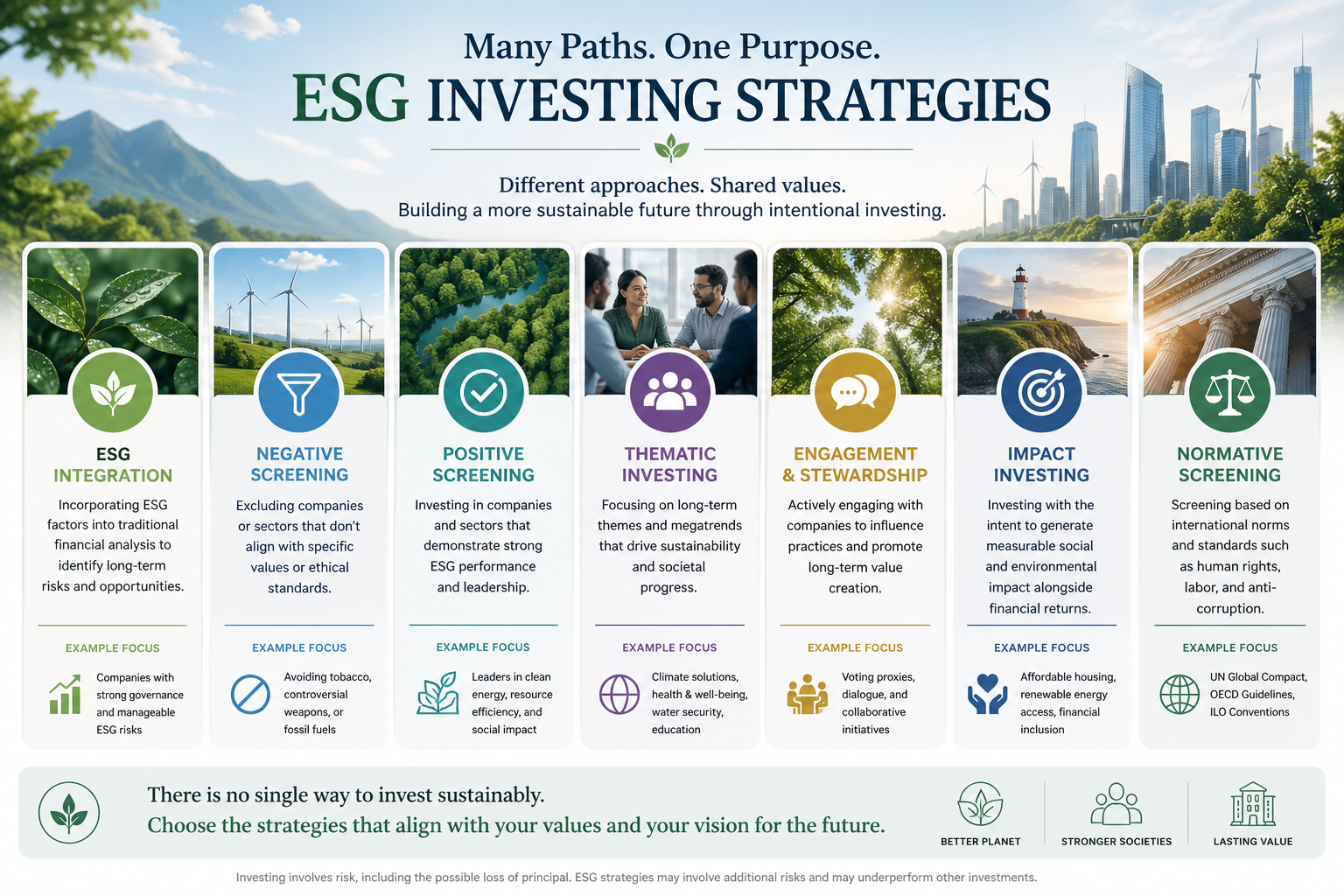
ESG integration—considering ESG factors alongside traditional financial analysis rather than treated as a separate category. This approach allows investors to identify companies that are not only financially strong but also resilient in the face of long-term challenges. For example, firms investing in renewable energy infrastructure or sustainable supply chains may offer more stable growth prospects over time.
Negative screening—avoiding industries that may conflict with personal values, such as fossil fuels or certain types of manufacturing. While this can provide clarity and alignment, it’s important to ensure that excluding sectors does not overly concentrate the portfolio or reduce diversification—especially for retirees who depend on steady income streams.
Positive screening—choosing companies within each industry that demonstrate the strongest ESG performance. This method allows for broad market exposure while still prioritizing responsible corporate behavior. For Hawaii-based investors, this might mean supporting companies that lead in sustainable tourism practices or renewable energy innovation, even within traditionally resource-intensive sectors.
Thematic investing—focusing on specific areas such as clean energy, water conservation, or climate resilience. These issues are highly relevant to island living. While these investments can offer compelling growth opportunities, they should be balanced with more traditional holdings to avoid overexposure to a single theme.
Engagement and stewardship—engaging with companies as shareholders, voting on corporate policies, or encouraging better ESG practices. Rather than simply avoiding companies with weaker ESG profiles, investors can help drive meaningful change through active ownership. For long-term investors, especially those planning for decades of retirement, this can be a powerful way to align financial and social outcomes.
Impact investing—generating both financial returns and measurable social or environmental benefits. Unlike traditional ESG investing, impact investing intentionally seeks to create positive change while supporting long-term portfolio growth. This may include renewable energy, sustainable agriculture, affordable housing, or ocean conservation initiatives.
Normative screening—assessing companies based on internationally recognized ethical and governance standards, including labor practices and human rights. Instead of simply excluding entire industries, it identifies organizations that meet higher benchmarks for responsibility, sustainability, and community stewardship. This values-based approach aligns with growing investor priorities and resonates strongly with many Hawaii residents who prioritize long-term social and environmental impact.
Challenges of ESG Investing
Of course, ESG investing is not without its challenges. One common issue is inconsistency in ESG ratings. Different organizations may evaluate the same company differently, making it important for investors to look beyond surface-level scores and understand the underlying data. Another concern is “greenwashing,” where companies overstate their sustainability efforts. This makes due diligence and working with knowledgeable advisors especially important.
For those who are hesitant about ESG or prefer a more traditional approach, there are still ways to incorporate similar principles. Focusing on high-quality companies with strong management, low debt, and long-term growth potential often leads to portfolios that naturally align with many ESG characteristics. In addition, maintaining a well-diversified portfolio across sectors and asset classes remains a cornerstone of sound retirement planning.
Best Practices for ESG Investing
One of the most important ESG investing best practices is starting with a clear understanding of your personal values and financial goals. For some investors, ESG investing may focus on environmental sustainability and conservation, while others may prioritize supporting local communities, social responsibility, or strong corporate governance. Once these priorities are defined, they can be used to create specific ESG investment criteria that align with both long-term financial objectives and personal values.
Maintaining balance is another key principle of successful ESG investing. Retirement portfolios must still meet income needs, manage risk, and adapt to changing market conditions. ESG considerations should enhance—not replace—these core objectives. Diversification remains essential, particularly in Hawaii, where economic exposure can be concentrated in a few key industries.
You should always monitor ESG investments as part of your ongoing investment strategy. ESG performance can change over time, and companies that are leaders in sustainability and governance today may not maintain that position in the future. Regular portfolio reviews help ensure continued alignment with both evolving ESG priorities and long-term financial goals.
Finally, transparency and education are critical. Investors should have access to clear reporting on how their portfolios align with ESG principles and what impact they are having. Advisors, in turn, must stay informed about evolving standards, regulatory developments, and new opportunities in sustainable investing.
Ultimately, ESG investing gives Hawaii residents a way to align their financial future with the long-term well-being of the islands. For retirement planning, ESG provides a broader framework than investment returns alone—helping investors manage risk, support sustainability, and invest with greater purpose. By thoughtfully incorporating ESG principles into a diversified, well-constructed portfolio, investors can pursue a retirement that is both financially secure and aligned with the values that make Hawaii unique.